A practical review of the artwork, film, registration, sealing and optional-feature decisions that must be settled before an 8-side-seal pouch enters production
Why 8-side-seal pouches need a different production plan
An 8-side-seal pouch, also called a flat-bottom or box pouch, combines front and back panels with two side gussets and a bottom structure. The format stands well on the shelf and offers several printable faces, but the additional webs, folds and seal intersections make it less forgiving than a conventional three-side-seal pouch.
The finished pouch must be reviewed before the machine layout is discussed. Pouch dimensions, panel orientation, film structure, zipper or spout position, print repeat and packed-product requirements all affect the converting route. A generic machine model or a speed figure cannot replace this application review.
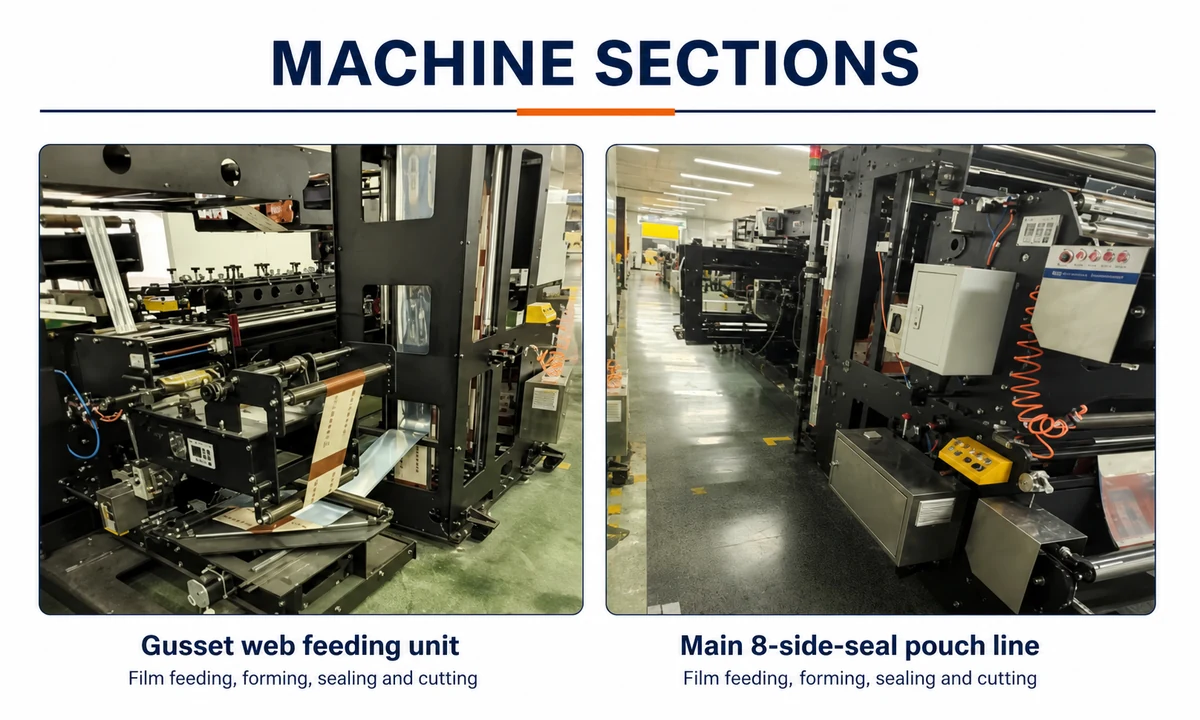
Machine sections and material flow
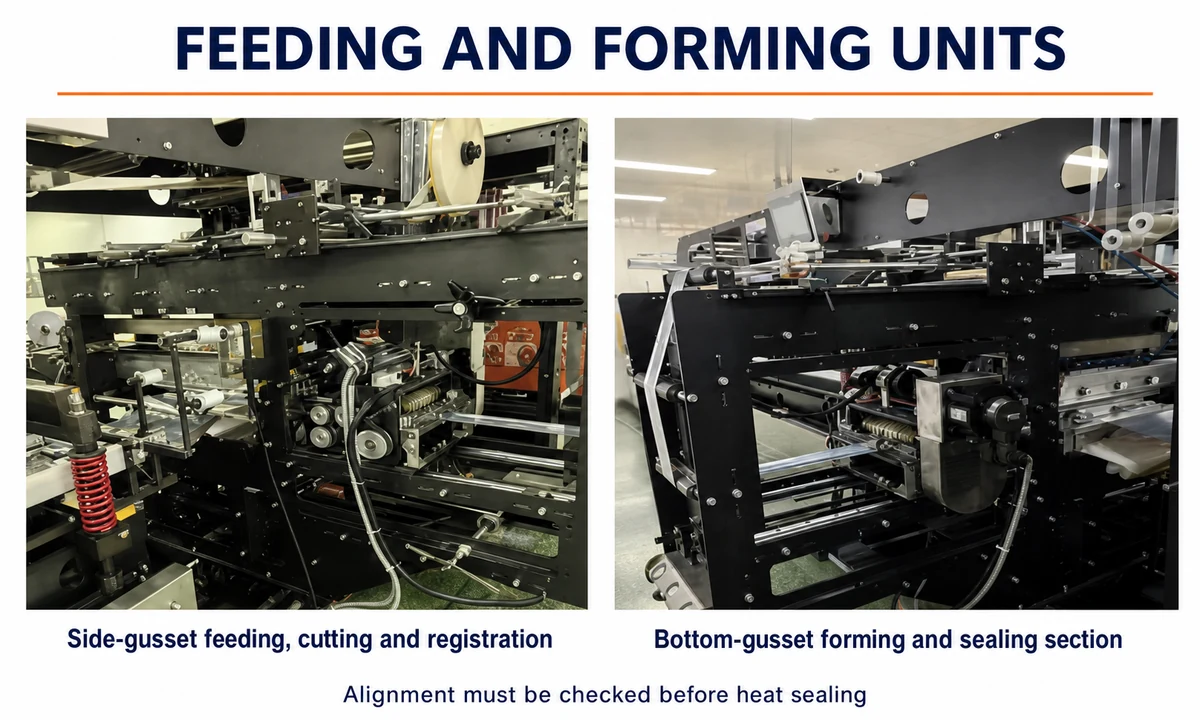
A typical line may coordinate a main printed web, side-gusset webs, a bottom-gusset web and optional zipper feeding. Each web needs stable unwinding, tension control and alignment before it reaches the forming and sealing stations. Film that enters the machine with curl, uneven tension or inconsistent friction can create registration drift and unstable folds later in the process.
Servo feeding and automatic tension control are widely used to keep thin film moving accurately through a long pouch-making line. Printed structures also need reliable photoelectric registration. When separate printed webs must align, the control strategy should be confirmed from the actual artwork and film rolls rather than assumed from a catalog description.
Typical pouch applications
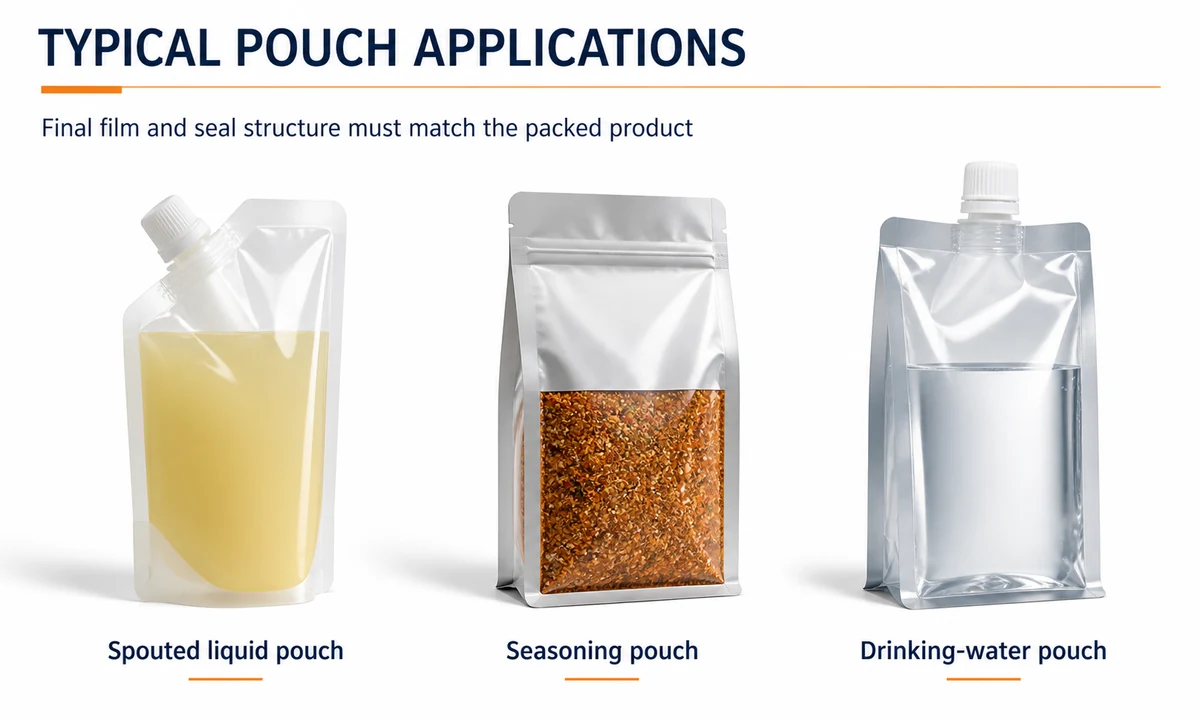
Eight-side-seal pouches are used for coffee, pet food, snacks, dry foods, nutrition products and selected liquid applications. Zippers, spouts, handles, valves and easy-tear features can improve convenience, but every option changes the artwork, material construction or machine setup.
The packed product determines the barrier, sealant layer, drop resistance and leak-testing requirement. A dry-food pouch and a liquid pouch may share a similar shape while requiring very different film structures, seal widths and inspection methods.
Artwork and panel layout
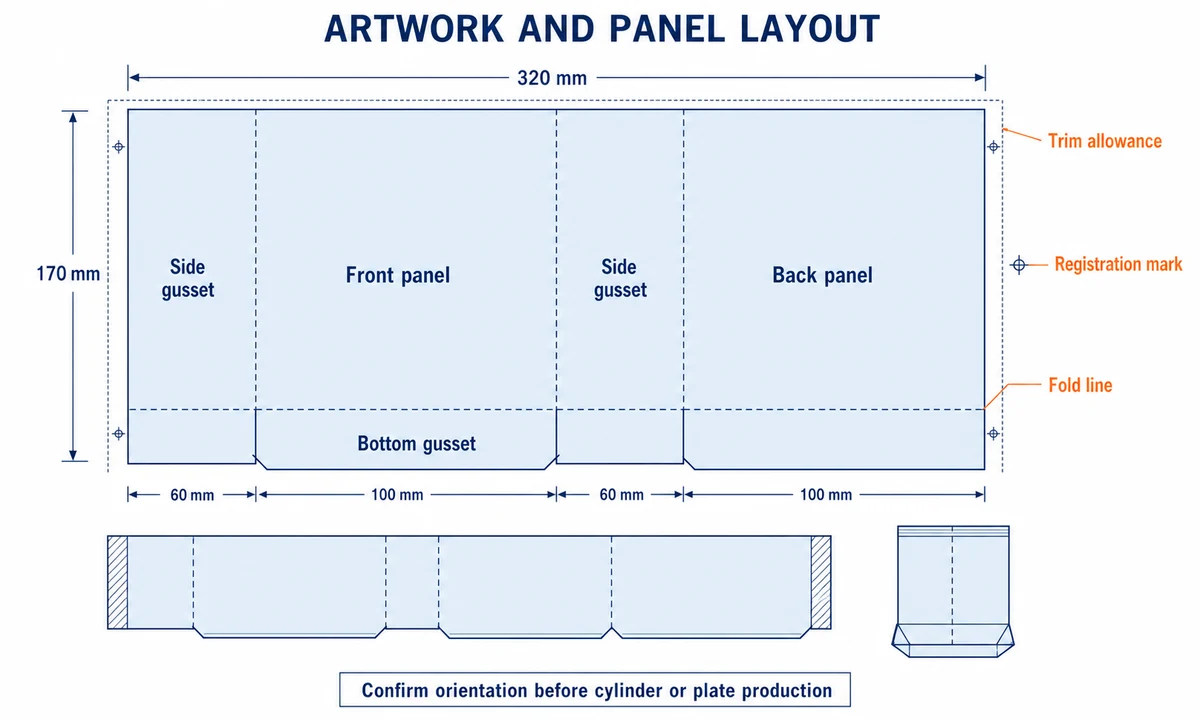
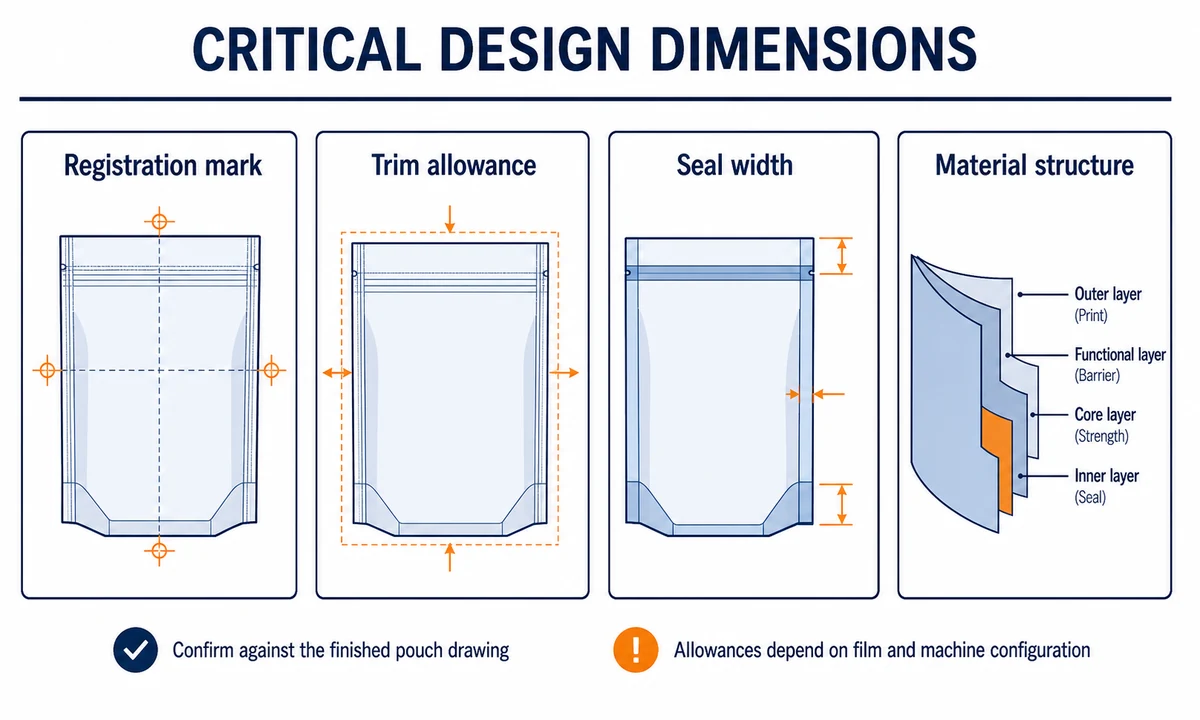
Artwork preparation starts with the finished pouch drawing. The front, back, side-gusset and bottom-gusset directions must remain correct after folding. Print orientation, fold lines, trim allowance, zipper position and registration marks should be agreed before cylinders or plates are produced.
Single-lane and multi-lane layouts can place panels in different directions. Bottom artwork is especially easy to reverse. A final imposed file should therefore be checked against a physical mock-up or a clearly marked folding diagram before printing begins.
Critical dimensions are application-specific
Registration-mark size, trim allowance, seal width and gusset allowance are not universal numbers. They depend on the optical sensor, printing accuracy, film stiffness, machine configuration, pouch size and required seal strength. The converter and machine supplier should approve the same dimensioned drawing.
Seal width must provide sufficient strength without reducing the useful panel area or creating excessive stiffness. Areas where several layers overlap need particular attention because heat must pass through a thicker stack while the thinner regions must not be overheated.
Material structure and machinability
Laminated films remain common because the outer, barrier, strength and sealant functions can be assigned to different layers. A material that looks suitable on a data sheet may still behave differently during unwinding, folding, sealing and cooling because of thickness variation, coefficient of friction, curl or shrinkage.
Mono-material PE structures can be considered when the complete construction is qualified for the application. They should be tested for sealing-temperature window, stiffness, zipper compatibility, tracking stability and packed-product performance. The material name alone is not enough to approve production.
Production-control checkpoints
Stable output requires the process to be treated as one connected system: web tension influences registration, registration affects folding, folding changes layer buildup, and layer buildup changes heat transfer. Temperature, pressure, dwell time and cooling must therefore be validated together with the actual production film.
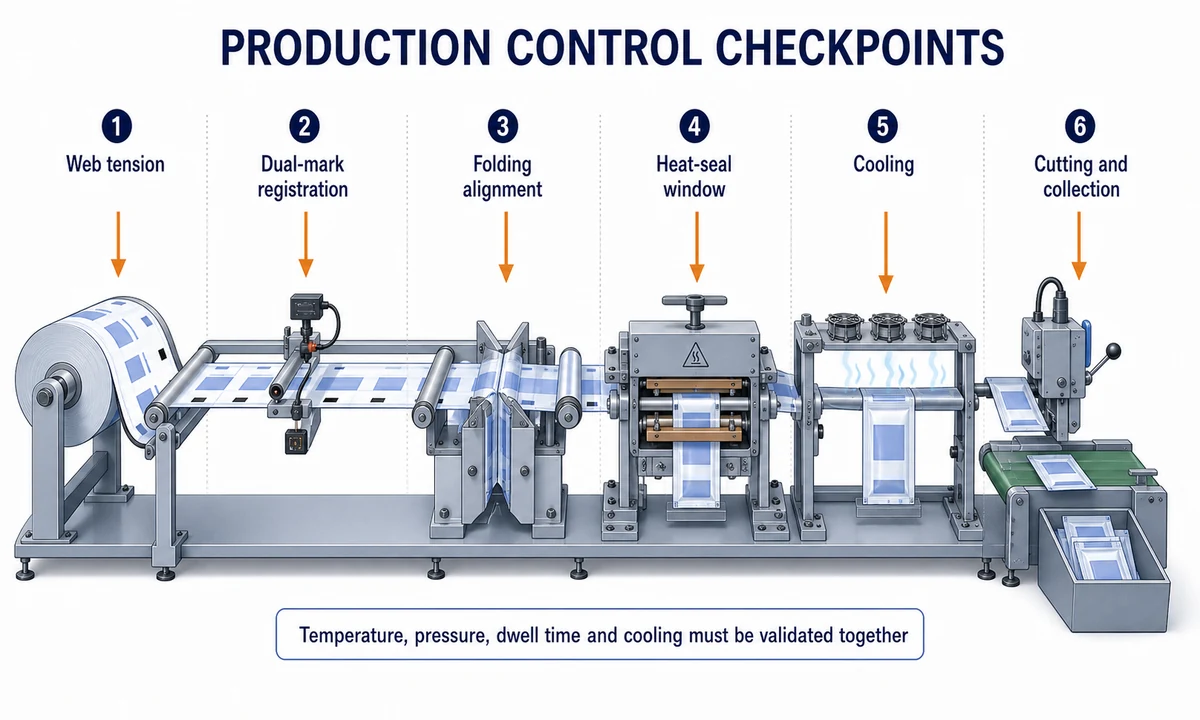
Dual-mark tracking may be appropriate when independent printed webs must stay aligned. Cooling is as important as heating because the seal must stabilize before punching, cutting and collection. Operators should record a repeatable setup window instead of relying on one temperature value.
Alignment and converting details
Side-gusset folds, zipper position, handle holes and easy-tear features must be checked against the artwork and seal area. A feature that is only a few millimetres out of position can interfere with a seal, weaken an opening area or make the finished pouch look uneven.
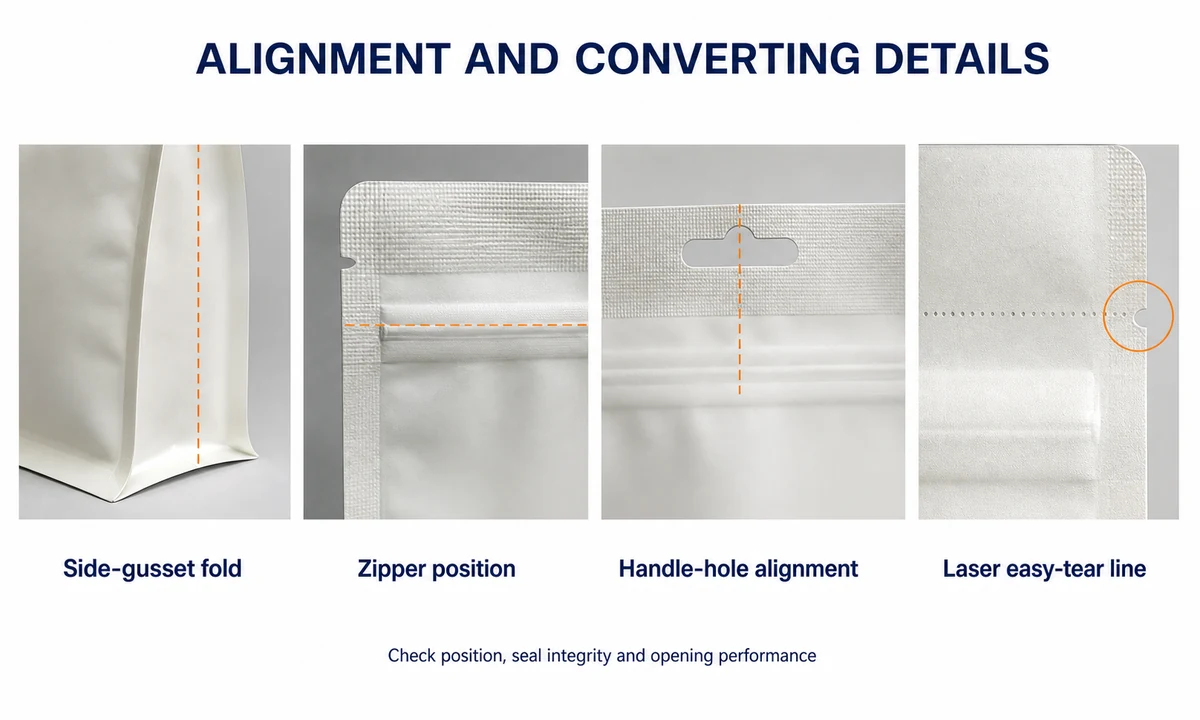
Quality checks should include panel registration, pouch dimensions, fold symmetry, seal appearance, seal strength, leakage where applicable, opening performance and flatness. Samples should be taken after startup, after a roll change and after any major setting adjustment.
Optional features must be planned early
Zippers, easy-tear notches, spouts, handles, one-way valves and coding units are not simple last-minute accessories. They can require extra material, dedicated feeding or punching units, different seal geometry and additional inspection points.
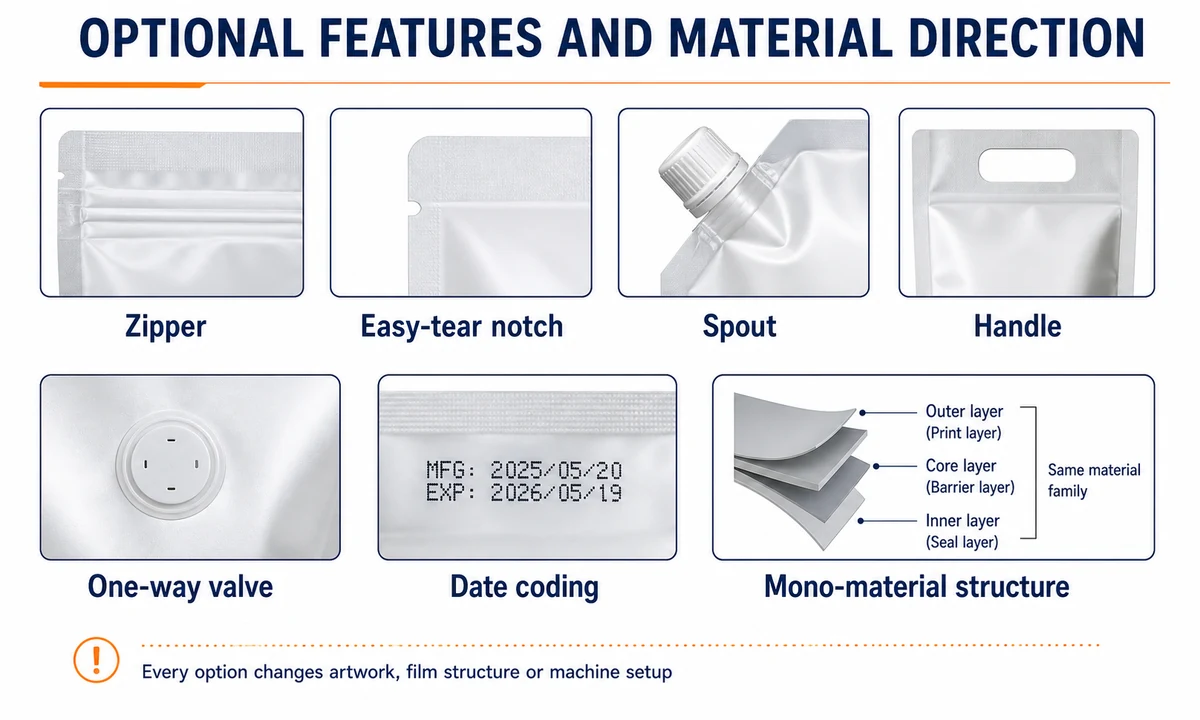
For coffee or other degassing applications, valve position and attachment quality must be confirmed with the valve and film combination. For liquid applications, spout sealing and leakage performance must be validated under the expected filling, transport and storage conditions.
A practical pre-production checklist
Before requesting a machine proposal, prepare the finished pouch or drawing, all panel and gusset dimensions, film structure and thickness, print repeat, zipper or spout specification, required holes or notches, packed-product information, target output and destination power standard.
Before mass production, approve the artwork orientation, verify roll condition, test the material on the intended process, establish the sealing and cooling window, confirm registration stability and retain approved samples. This sequence reduces avoidable waste and gives the supplier a clear basis for machine configuration and acceptance testing.